Widowed After 29 Years: Dr. Tina’s Raw Journey Through Loss, Faith & Finding Purpose Again | BW: 199
Jun 11, 2026[TRANSCRIPT BELOW]
Quick note: We had a weird static issue on this recording. We cleaned it up as much as possible, and the conversation with Dr. Tina was too powerful not to share.
Connect with Tina:
Website - https://tinafornwald.com/ https://widowhood-realtalkwithtina.org/
Children’s Secret Santa - https://widowhood-realtalkwithtina.org/children-of-widowhood/
Three-Night Healing Retreat - https://widowhood-realtalkwithtina.org/real-widowhood-weekend-nextyou-experience/
Link For Free Gift Or Offer (If Any): https://tinafornwald.com/where-grief-gets-stuck/
Free Gift/Offer Description (If Any): Discover which of the Five Survival Patterns may be keeping you stuck in grief. Complete the free self-assessment and instantly receive a downloadable guide with practical insights, reflection questions, and next steps to help you reconnect with hope, purpose, and healing.
Brave Widow Resources Mentioned
- Learn more about Brave Widow Foundations (gentle, faith‑based support for the first seasons of grief):👉 bravewidow.com/foundations
- Join us for Renew: A Brave Widow Retreat: https://bravewidow.com/retreat
- Join the free Brave Widow Community: https://bravewidow.com/free
- Brave Widow Academy (apply): https://bravewidow.com/academy
- Schedule a free, no-pressure call: https://bravewidow.com/call
What do you do when it feels like life just keeps hitting you with loss after loss?
In today’s episode, I’m joined by Dr. Tina Fornwald: retired Army officer, breast cancer survivor, and widow after a 29‑year marriage. We talk honestly about stacked suffering, listening to God’s promptings, surviving those first months when simply bathing feels impossible, and how she slowly rebuilt a life that now includes a nonprofit, a Secret Santa program for widowed families, a memorial garden, and her new novel The Five Widows Club.
If you’ve ever wondered, “Does this ever get better?” this conversation is for you.
Chapters
0:00 – Intro, Renew Retreat & Foundations announcements
3:00 – Dr. Tina’s story: 29‑year marriage, Army life & sudden loss
8:00 – Breast cancer, stacked suffering & surviving the first few months
14:00 – Wrestling with God, honesty in grief & when hope starts to return
21:00 – Secret Santa, memorial garden & The Five Widows Club
30:00 – Purpose, pressure & encouragement for years 1–10 of widowhood
Links & Next Steps
Learn more about Brave Widow Foundations (gentle, faith‑based support for the first seasons of grief):
👉 bravewidow.com/foundations
Join the free Brave Widow Community and get Momentum Monday calls:
👉 bravewidow.com/free
💛 Ready for deeper support?
Brave Widow Academy is my 6‑month, faith‑based program to help you heal your heart and rebuild a life you can love again. Small group, step‑by‑step roadmap, and weekly support. Learn more and apply here: bravewidow.com/academy
Subscribe for more faith‑based, hopeful grief support for widows:
@BraveWidow on YouTube, TikTok, Instagram & Facebook
💬 If this episode helped you, please:
- Hit Subscribe
- Leave a quick rating & review – it helps more widows find this support
- Share this with a friend who’s facing grief or the holidays without their person
If you’re new here, my name is Emily Tanner. I’m the founder of Brave Widow and Brave Widow Academy.
I help widows move from barely surviving their loss… to rebuilding a life they can actually love again without feeling like they’re betraying their person.
By day (and for 20+ years), I’ve led large teams and complex operations in the corporate world.
After my husband Nathan died in 2021, just shy of our 20-year anniversary, I took everything I knew about leadership, systems, and change — and started applying it to grief.
Since then, I’ve:
Shared my story publicly to make widows feel less alone.
Launched the Brave Widow podcast, now with 180+ episodes and listeners around the world.
Coached hundreds of widows 1:1 and in groups, and talked with thousands more through the podcast, communities, and events.
Built Brave Widow Academy, a 6-month coaching program with a clear framework for moving from deep grief to rebuilding a life you can love again.
I don’t teach “just think positive” grief tips.
I teach widows how to:
Heal their heart.
Stop waiting on “time” to fix everything.
Take small, brave steps toward a life that feels meaningful again.
How I Got Here…
2021: My husband Nathan dies unexpectedly. I’m 4 kids in, overwhelmed, and drowning in paperwork, decisions, and pain. Therapy helps, but I still feel stuck with no roadmap.
2021–2022: I start devouring books, interviewing widows, trying grief groups, and studying coaching — desperate to find something that actually helps me feel different.
2022: I start the Brave Widow podcast, recording episodes while terrified and crying between takes — but determined that no widow should feel as alone as I did.
Year 1: I begin coaching widows 1:1. Word spreads quietly. The same patterns and problems keep showing up, so I start building frameworks instead of one-off advice.
Year 2: I launch Brave Widow Academy — a structured, 6-month coaching program with a step-by-step path: from deep grief, to stability, to rebuilding.
Year 3: Brave Widow has listeners around the world. I’ve personally coached hundreds of widows and spoken with thousands more through consults, lives, emails, and DMs.
Today: My work is simple:
Help widows stop surviving each day… and start rebuilding a life that makes them genuinely glad to be alive again.
TRANSCRIPT
Speaker 2: [00:00:00] Hey, hey, and welcome to another episode of The Brave Widow Show, episode number 199. Today, I talk with a fellow widow, now friend, Tina. And before I dive into her episode I just wanna remind you quickly of two things that we have going on right now, real time, if you are listening to this in June of 2026.
Number one, we have Renew, the Brave Widow retreat that's happening in person in Klamath Falls, Oregon later this month starting on June 28th. So if you've been looking for an in-person retreat, maybe a little getaway, a place to just, ah, let your shoulders down, I'm gonna put the links to the details in the show notes and also a link to a video where you can watch and learn more about that at bravewidowretreat.com.
And also if you are listening in June we have Brave [00:01:00] Widow's Foundations, that is officially launching June 22nd of 2026. And Foundations is that space where you have everything you need, whether you're early in grief as a widow or it's been a while for you since you've been widowed but you're feeling overwhelmed, or maybe life has dealt you a lot of losses.
If you crave stability, if you crave a sense of calm out of the chaos, if you're looking for support and guidance when life just feels super overwhelming, Foundations was created just for you. If you join by June 22nd, you can still qualify as a founding member which means that you save $100 off of the enrollment fee for the whole year and you also get special calls with me that I'm only doing with founding members throughout this year.
So go to [00:02:00] bravewidow.com/foundations to sign up. There's no application process. There's nothing hard or heavy about joining with that and we would love to see you and support you there. All right, so let me introduce you to Tina Dr. Tina R. Fornwald is a grief advocate, transformational speaker, author, and founder of Widowhood Real Talk With Tina, a nonprofit dedicated to supporting people navigating life after loss. A retired and decorated US Army officer, breast cancer survivor, and widow after a 29-year marriage. She brings both professional insight and deep lived experience to help faith communities, workplaces, and support networks better care for people in grief. She's the creator of Where Grief Gets Stuck: The Five Survival Patterns Framework, and author of The Five Widows Club, a novel about widowhood, friendships, and rebuilding life after loss.
All right, let's dive in.
Emily: [00:03:00] Dr. Tina. Thank you for being willing to come and share your story and all of the amazing things that you're working on.
Dr. Tina: Thank you. This is a conversation we've been meaning to have for a while, so I'm glad we finally were able to do it.
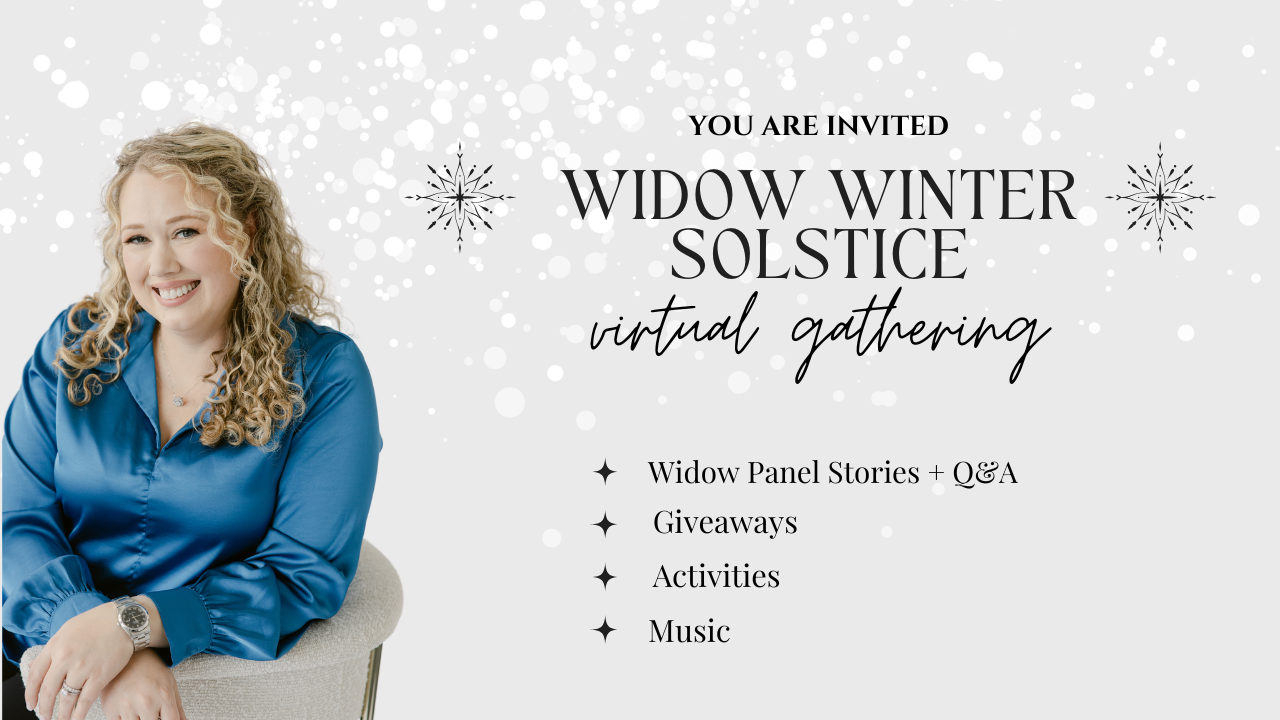
Emily: Yes. And, you've been a friend of us here at the Brave Widow family for a while. You were part of one of our Win for Solstice events, and powered through even though you were really sick. You were like, we're- Oh my
Dr. Tina: gosh, you are so right.
Emily: You're like, "I am not not doing this. I'm still showing up," like, four days before Christmas.
So that was, amazing, so thank you for that. But I know our audience would love to just know more about you and your story, and then you have a lot of exciting things that you're working on that we can dive into, so...
Dr. Tina: well, thank you. And I wanna say the start, showing up for the Winter Solstice was important.
Being a widow myself, when people make promises, we expect them to [00:04:00] show up, and when they don't, it hurts in a different kinda way. So we've had so many pre-prep meetings, I was like, "I'm gonna have to figure this out," and I'm glad that I was able to. So I take this sisterhood, and for the widowers, this is important when we say we're gonna show up for this community.
Mm-hmm. So I guess the question is how I became a member of this community. My late husband and I were together for 32 years. We met in the US Army. We were stationed together at Aberdeen Proving Ground. And the funny part is I said I was never gonna date someone the same height as me. Well, I l- I married a whole person the same height as me, 5'9", and I have no regrets.
We traveled the world together. We have two adult children, and I was hoping for another 32 years together, but that is not what life had available for us. And Mark, but I am grateful that taking the time to listen to the- The voice of [00:05:00] God to me, because the weekend that Mark passed, I was supposed to have all these responsibilities.
I could hear God clearly saying, "You need to spend time with your husband." And at that point, Mark was working in Virginia, and we were in Pennsylvania, the children and I, and I was trying to get a job in Virginia. And in my mind, it was first like, "You know what? I'll see Mark in a couple weeks. I don't wanna have to drive down to Virginia and do all those things."
But I heard that direction again, and I listened to it. I know for me, that probably was a lifesaver. If I didn't listen to God's prompting and Mark left this world the day that he was planned, I would have regretted not listening and following through on that. Sometimes we get an opportunity to get a redo.
Sometimes we hear God's prompting and it's one time, and that was one time for me, and we met that weekend. Unfortunately, he did have a heart attack. We were in Delaware, halfway between Virginia and Pennsylvania, and my life was shattered. I would have never thought, now heading into the [00:06:00] 10th year of his passing, to be able to talk, to share, and to provide things to encourage and help other people on this very difficult journey.
Emily: How did you even navigate those first few months, especially being, you know, between in, in the midst of travel or between states and, and the reality of this? What was the most helpful for you during those first few months?
Dr. Tina: Those first three months, letting go of all responsibility, letting go of anything that I had to do.
It became very elementary, that realizing there wasn't anything that I had to do. I didn't bathe. I didn't go to work. It was just the reality of me telling myself, "Your husband died." Okay. That was enough every day. There were Post-It Notes around my house, different notes reminding me. I felt like it was Dog Day Afternoon, like I knew I had things to do, but what they looked like in doing them was totally different.
[00:07:00] I started seeing a therapist for the first time. I allowed myself to receive help from family and friends. For that first month, um, the first two weeks, my youngest s- my brother was there, and then the second week a first cousin was with me, and I just allowed people to help and to show up. And I know for me, that was powerful.
But I have learned that there are a lot of people that don't always have that option, that friends and family don't know how to show up. But I encourage the people that are listening that feel like that, value those that do show up, because the one or two that show up may be the people you least expected, but it will be gold.
Emily: Sometimes it's hard to let people help us , Or to think that it's okay to let them help us in those times. So I'm glad you do that. I might have been a little more stubborn than you are for letting people help, so.
Dr. Tina: But my, my pregame was breast cancer, so- Mm-hmm ... I had just gone through breast cancer and [00:08:00] treatment, so I, I thought I was at rock bottom.
I finished my last cancer treatment, I wanna say October 2016, and then Mark passed in March of 2017. Mm. So I, I didn't have any strength to even try to pretend like I could do it all. The cape was gone.
Emily: I imagine at times you had to think, you're like, "God, I mean, how much suffering?"
You know? There are all these, it feels like, losses or things that I'm going through, and it's easy to look around and feel that no one else is having to go through as many things or as hard of things. So I imagine that it wasn't easy either.
Dr. Tina: you know, I kinda lean on the glass is half full. That's my disposition.
That's my personality. That is where I find comfort, and not in some toxic po- positivity sorta kinda way, but it's like, okay W- unfortunately, but fortunately, my husband thought that he was gonna leave this world by the age of 55. [00:09:00] He left this world at 51, but because of chronic heart conditions in his family, we talked a lot about what my life would be like in his absence.
One hand, I cannot stand him for every conversation. On the other hand, I am so grateful to him for every conversation. And one thing I'll share with you, after Mark passed and my cousin left and my brother was no longer there, I had a cup of tea and I was looking out of the window into our backyard, and there was a deer there 'cause Mark was a avid hunter, a styrofoam deer, something he used, with arrows, to practice.
And I remember just going, "He is never, ever gonna shoot a arrow in that deer again." And I could hear God say, "The plans that I have for you are good." And I was like, "Oh, I must be sleep-deprived because we just had breast cancer. We just had an emergency hysterectomy because it was going to ovarian cancer, and my son [00:10:00] left to go to the military.
Now my husband died. God, mm, I'm, I'm not feeling the plans, the, and that, all that. That sounds like, mm, no." And God started giving me 20 different things that He did in preparation for Mark leaving, and one of the things was my husband getting a job out of town. That allowed me to start learning how to live with the empty bed, to learn how to live and do things independent of him.
The second thing was my husband, so junky. I love him to this day, but if that man knew that he could collect something, he would keep it. And so he was a electrician, and one of the things that he used to collect was copper 'cause he would recycle that. I had no idea how much copper this man had hidden around our property because it was a big yard, but since he has took this job out of state and I was looking to come, he had to now start pulling up all this copper and recycle.
I was like, if he would've died [00:11:00] and left me with that, the, a level of madness I would've had. And it was just simple things like that, and, and I immediately wrote them down in my journal, and I was like, "Okay, God- I'm not a fan of this, but I trust you in this process. And so, yes, most horrific experience in my life, but God has carried me through this.
Emily: That's so powerful, man. I just hear from so many people that it's not just the loss of their, their person, it's multiple losses, or it's a loss and emptiness, or something in the house goes crazy, and now they're having to deal with not being able to live in their house, or it's utter chaos, and it just feels like sometimes life is just relentless.
And you sharing that is such a powerful picture of how we can acknowledge the awfulness of things that happen, and also [00:12:00] still try to have faith and figure out what that could possibly look like.
Dr. Tina: I would agree because if we try to do it one without the other, it's not balanced.
If I met someone and they told me their spouse died, even if they had a bad marriage, there's still sadness because it's the unfulfilled expectations. So we have both. I think that becomes the struggle in our faith that, am I a good Christian if I'm having a hard time and I'm being honest to God about that?
But how can God meet me in my suffering and my pain if I'm not honest to God about it?
Emily: It's been almost 10 years, not quite, since he died, and you're in somewhat of a n- unique situation because I think newer widows who are earlier on are very vocal, and they share a lot, and are still trying to figure things out.
But I also think it's helpful to hear from someone who has perspective of time. So it's been almost 10 years now, and certainly [00:13:00] how you feel or what you experience now seem to be very different than what you did earlier on. What would you say, when do you start to actually see any evidence like there could be hope?
Maybe I could enjoy life again. Even though you believed it was possible, was there ever a time you started to see like, "Oh, I see how maybe this could be true in the future"?
Dr. Tina: That is a really good question, and what it takes me back to, I was at work and I was walking with my friend Elizabeth, and I remember the clouds being so dark.
And I was like, "Well, we probably should go back in. We're probably gonna get caught in the rain." But what I also saw was a clearing on the other side of the clouds. And in my heart I said, "Right now, I am in those clouds. I am in the thick of that. But one day, I'll be on the other side of those clouds.
The thickness in the clouds still may exist, but it won't be the most [00:14:00] heaviest part for me." Mm. I can't say... I remember that being the vision saying, "Okay, Tina, there is possibility to be able to live." When it started to change, I don't know if there's a moment that I could say it was this day. I think it was a built up of different choices that I made, the choice to not be isolated, to lean in to family and friends, to talk and to share.
I remember one of the times, one of my coworkers, we'd eat together, and they would always, when I got to lunch, say, "But how are you doing?" And I was like, "I know y'all love me, but let me tell you, I'm horrible. Every day I wake up, he died. So you asking me how I feel-" I, I wanna tell you all of this, but then I don't want you to think I have lost all of my mind.
And so I told them, "Ask me how I'm doing this moment." Mm. And that shift was a little bit of less pressure. Me finding my voice, people wanting to help [00:15:00] and being able to say, "This is what I need." I think it was just over time choosing to choose a action that was causing life versus causing me to just survive.
Emily: Yeah, I love that question, how are you in this moment? Or sometimes I'll ask people, how are your heart right now? Because it feels a little weird to ask people how they're doing, but just to acknowledge that sometimes it is moment by moment, that we can be at a different place. I know since that time that you have done so many amazing things , And which one maybe are you most excited about
Dr. Tina: I would actually like to dive deeper into the program that we have called Children of Widowhood Secret Santa And when I started the nonprofit Widowhood Real Talk with Tina, the idea of helping widows or widowers or guardians that are taking care of children to have Christmas gifts was something I wanted to do.
I didn't know how. [00:16:00] I knew I didn't have the bandwidth 'cause working full time and everything else, but I knew it was something I wanted to do. And in the way God worked it out, a widow that I know from TikTok, approached me and said, "How about we get, we do this, this, this, and this to get kids Christmas gifts?"
And I was like, "Yes." And not only w- did she have the idea, she had the bandwidth to manage it. Mm. 'Cause, you know, people will bring you ideas, but when they can also take care of it, that's golden. Yeah. And then another widow approached me. I thought they spoke to each other. No, they had the same idea at the same time.
Right? And then they came to me, and I was like, "Oh, my gosh." So the first year, 2024, we had seven families and 11 children. For 2025, we... No, no. For 2025, we had 29 children, and of those 29 children, I wanna say 98% of them received the five gifts that they asked for. [00:17:00] And so the way the program works, from June 1st to the 30th, you can go to our website, select Events, and it says Children Widowhood Secret Santa.
You have to be part of the club. You have to be a parent of of, and one, one spouse has, deceased or maybe it was the children's... You weren't married, but their parent is deceased, or maybe you are the guardian and both parents are deceased. You go onto our website, put in, some information, and then the two widows that manage the program, they have signed a NDA.
This is very closely held. , Then around July 4th, I get with them and we go through all the names. We have to verify that people do have someone that is deceased, and because a lot of people are struggling, so we had to vet through that process because the community that we're supporting are the people that are children and who have one or both parents that are deceased.
And then I wanna say it's around July or August, we get [00:18:00] with them, we pull the names. We have a virtual thing where we say what the na- what the families are. The families are connected to a number. We'll never say their names out loud. And so we go family one, how many children, da, da, da, da, da. And then the widows will work with the families to create an anonymous wish list, and it is for each child to have one to five gifts selected Up to $50.
And then I wanna say it's October 1st, it then goes on our website, and it just says family one and the children, family two and the children. And people can either choose to sponsor a whole family, they can choose to purchase one gift, and it goes directly to them. All you see is the city or state. We also work with businesses that want to sponsor.
Because Widowhood Real Talk with Tina is a registered 501[c][3], they would donate, and then we use those funds just to purchase the gifts. And finances is such a difficult thing to talk about in this [00:19:00] grief community. People can hardly stomach you talking about lamenting for your spouse 10, 15 years later, let alone if there's financial hardship.
But it exists, and you are very much aware of that. So to be able to have a program, I mean, a person may just buy one gift for one child. And to be able to do that, the s- the spectrum of availability, it just excites me. I mean, we, I had a meeting with the widows that manage this program, and I was asking them what success would look like for them.
And how, I said, "Well, if we got 50 children." They were like, "Okay." But I was like, that's more children. I- so success for me this year would look like we are so busy that we have to bring another widow or widower on to help champion this cause. Mm. So that is the thing that I am most excited about.
Emily: Oh, that's amazing.
I love that. And I've seen in so many Facebook groups, they try to sometimes coordinate a Secret Santa thing. Or w- it's just not [00:20:00] organized, or people really struggle getting responses and that sort of thing. So to know that you all have a system and a process and, good communication as a family is like, I think that's amazing that you're able to
Dr. Tina: do that.
It is. Thank you. At first, we were gonna do this thing where people give us money, then we buy gifts. And one of the widows was like, "Let's make it simple." And I was like, " You are absolutely correct." And it has just been amazing. Like, they're checking the list to see how many gifts have been, uh, obtained for each family and checking them off, and just getting so excited to see that these people were helped.
And sometimes we feel like nobody cares when we're in this journey. And to think a stranger cared enough to either purchase a single gift or cover your whole family can make all the difference in the world in this journey.
Emily: Yeah. Yeah, I think that's such a great point because, one of our challenges as widows is we feel unseen, or we feel [00:21:00] like we're invisible.
We'll put,, all the links that you mentioned today in the show notes. So if you're watching or you're listening, you can go back to the show notes and find those links if you want to, apply for your kiddos or if you know someone who can benefit from that.
Dr. Tina: The two other things that I'm excited about is, the second one is a memorial garden that we are starting here in Norfolk, Virginia, and that's something I wanted to do. And we actually have, an architect engineer company here that donated their time to first provide us with four different drawings.
Then I went back to the person that already designated land for us to do this. So we... Right? So we've been designated land for the garden, for a memorial garden, and also a different part of land to have a food garden to be able to provide food in the area, because where this is gonna be is much of a financial desert.
And I wanted [00:22:00] to do it there because, to me, those would be the people that would experience grief in a way that does not allow them to step away from life to be able to sit in it. If I'm making between 65 to $55,000 a year in a family, the idea of taking off a day of work to be able to just be sad, I'm having to push through that.
So where the garden is, we'll have a opportunity to have a memorial portion, and then also a food, uh, portion that's providing food for the area. People in the area can come and take food from it, fresh food and produce, for their own livelihood. So we had an, uh, gala called Hope Grows Here on May 16th, and we were able to show the renditions of the drawings.
They gave us 3D drawings to be able to share with people, and now we're trying to partner with local communities, uh, and for the people that are grieving to be able to sponsor a paver or [00:23:00] a bench or a flower garden or a food bed. Because we oftentimes want something where our loved one's name exists, to be able to say that, "This is where Ralph," or, "This is where Elizabeth," or, "This is where Karen," where I'm honoring them.
And to be able to see that and knowing that you're giving to other people, that is inspiring. So that is the second thing that I am super excited about. The third thing is the book. It is, uh, uh, The Five Widows Club, and I never would've seen myself, like, writing a book, but here I am, done, and Amazon best seller.
And just, like, hearing the response from widows and other people reading the book- I mean, literally just last week someone purchased five copies of my book and gave it to me to give to people who wanted the book who couldn't afford it. That's the type of community that's been [00:24:00] created through the prof- the nonprofit Widowhood Real Talk with Tina, and this book is a outpouring of that.
Emily: That's so beautiful. So, You didn't see yourself writing a book, but somehow you have a published book. So what, what inspired you to put this book together, and what took like a bell?
Dr. Tina: So my first desire, which I think a lot of people go with, I wanted to write my memoirs. I wanted to talk about this amazing man, our love, and our children.
And then I was like, "Tina, you've been podcasting for about two years. I think you've already said the things. It's already, intertwined in one of the conversations." Because, as you're talking, you speak to your guest too, and part of your story's in there. And I just didn't feel like it was gonna be as impactful as I wanted.
And then I started writing a guide on how to support the bereaved, and I was about halfway in thinking like, "This is really good." Then I went to the bookstore, and those types of books are in the back in the corner where nobody goes to read them. I mean, we can't get people to talk [00:25:00] about grief, let alone I'm gonna give you a guide and you're gonna read.
I was like, "This is not gonna land how you think it is." So now I had spent about a year going back and forth, and so I said, "I'm, I'm, I'm not doing it. Wasn't gonna write a book anyway, so I'm free." I was driving. I wanna say I was driving home from work, and I could just hear God drop in The Five Widows Club.
I was like, "Now that sounds juicy. That sounds very int- That sounds like some Waiting to Exhale sort of for the widowhood." And because, so then I started doing some research. Most of the books that I've seen on widows, and this is about widows, it's either oversexualized, it's overdramatized, or it is a lot of sex.
And I don't, I mean, all of those exist, but I don't feel like that was the grit or the realness of what this experience looked like. So now I have this title. The women came to me and just started writing out the profiles. And next thing you know, I'm like, "Okay, I have the facilitator and I'm [00:26:00] doing all these different things, and it's coming together."
And I was like, "We, we, we are writing a book. Okay, here we go." And so now I've written it, and I was like, "How do I get people to look at it?" And, um, this app, I wanna say BookFunnel is what I used, and sent it out to family and friends. And my one niece was like, "Auntie, um, that was pretty fast. You just..." I, and I project managed the book.
I just hit the things. So then I had to go back and actually put in the sensory type things. Like when you walk in a room, what do you smell and see, and all the things that make it real. And, um, partnered with Highlander Press. Uh, Deborah Keavan has guided me through this process. And this is one of three.
The second book is about five widowers. I know. Like I went from zero to everything, and I've already started book number two. I have the profiles written out. I have some men that are gonna review them. And the third book is about five young adults. Two from [00:27:00] the widows, two from the widowers, and then one young adult we've not seen before.
So I say if you got a book in you- You never know what will come of it. Here we are.
And so it is, this book is about five widow- five women who are widows. There is a grief support guide, her name is June. And they meet, in a grief support group and where this relationship, the friendship, their journey, their backstory over the next five years.
So we could not be in this if we don't choose to show up every day. And the resilience these women, uh, creating new lives for themselves, cher- um, being there in support of each other. Real life. Real life. I, and from what I've seen and what my desire was, when people read this book, whether they're reading it because it's a book club and it's just a good story, or if it's the one person that feels like [00:28:00] no one has understood me as a widow, the people will see and feel connected to these women.
Emily: It's just so nice to be able to read a story , and know that the author actually understands the widow experience and what does this mean and all of the every way your life is changed because of that experience. So I have not read it yet, but I am excited to read it.
And,, I know it's gonna be amazing. So you have done so many things, just you have the biggest heart just with your podcast and all of these things that you're involved with in your community. And, I know it would be easy for some people to look at that and say, "Well, she probably got all the time in the world to work on these nice little projects," but you've been working.
You, you have a very full life. So I know there had to be moments where you wanted to quit, or you're like, "I don't know, [00:29:00] is this really for me?, Maybe this is like a pipe dream. I don't know. May- I'm not really the right person. I'm tired." Is there anything through that experience that you would share about what has helped you with juggling all the things or staying plugged into the why
Dr. Tina: 100%. Yes, yes, yes. I, the book is great. I gained 30 pounds, so there's always a trade-off. I mean, sitting down and having to write, rewrite. I mean, I have, I've read this book like four or five times. So that exists. Knowing this is what you're supposed to do is helpful. But I don't know about you, but I need, I need reminders.
I need, uh, confidence to say like, "Is this really what you're supposed to do?" And so one of the things that happened, um, starting this nonprofit, Widowhood Real Talk with Tina, sat down and looked at the cost of a 501[c][3] application, knew we were gonna do a podcast, and I have all these [00:30:00] totals. Somebody I know that does technology and all that stuff sat down with me, and I was like, "That is a big price tag.
Ooh, okay, look, I'm not sure about that." And so I had it, had it on my desk, the paper and all this stuff, and I was like, okay, and I'm kinda he- I'm like, "I don't know. Maybe I made this up. Maybe I shouldn't be doing this." And then our refrigerator just started leaking water like nobody's business. And I was like...
Now, this house at that point was maybe seven months old. We're talking brand-new refrigerator. And it would just happen at the most random times. So now I'm on the s- the phone with, the warranty company. I'm going back and forth, and then they had somebody to come out, then that didn't work. Gazillion phone calls later, they said, "You know what?
We're just gonna refund you the cost of the refrigerator. You can go buy your own." What happened after they gave me that money? Hmm. The refrigerator stopped leaking water. The amount of money was exactly the money that [00:31:00] I needed- What? ... to do the... And I was like-
Emily: No way ...
Dr. Tina: I was like, "I guess I'm starting a podcast, and I've- guess I'm starting a 501[c][3].
Guess we're doing that That was like, I could not have made that up. I could not have make that happen. And it was little things like that along the way that reminded me, this is what I'm supposed to be doing. Now let me be clear, I'm not a big pain out of purpose scenario. My husband didn't die and I went, "Oh, I'm gonna make purpose out of this and I'm gonna help people."
No, I was not bathing and I was trying to figure this out. This came about seven years down the road. Mm. I was just trying to survive. I felt God's calling to turn this and to make it something available for people. My nonprofit, Widowed Real Talk With Tina, is not a religious affiliation because I have talked to too many people that are mad at God, that are upset, that they don't [00:32:00] wanna hear.
They just wanna know, do you love me and can you sit with my pain? Me personally, there's no way I would've survived this without leaning on God. So being able to separate those two is rewarding, and also the reality, like you said, don't look at, like, where I'm sitting here right now. If you'd have seen me 10 years ago, I was at the end of a hallway screaming into a phone telling my sister, "But I love him."
Because in my mind, how could this be happening on vacation? And I, and, and for the adults out here, we had a very good night the night before. Like, who shows up in heaven like, like wh- what? So let it be, and if it evolves into something, that's fine, but you are the most important part of this journey. And for you to be able to find joy, happiness in whatever it is.
Maybe you said you're gonna start listening to, Emily's podcast and on a regular basis because you know [00:33:00] you wanna do something. Or maybe you want a coach because you don't know how to get yourself unstuck. It's okay that it's hard. This is difficult, but you don't have to do it alone.
Emily: Mm. Yeah.
That's so good, and I think it's helpful because we are so quick to disqualify ourselves with it being like, "Oh, I could never be that. I could never write a book. I could never start a podcast. Like, that was probably easy. Like, Tina's probably written a bunch of books," right? You know? That's what people will think is-
Dr. Tina: Yes
Emily: like, oh, she did all that, that was easy for her. But it wasn't easy, and it wasn't something, like you said, that just happened right away
Dr. Tina: oh, no, I'm over here biting my nails waiting for people to tell me, like, after they...
'Cause, you know, it's one thing when you have this good idea in your head, and then when you say it out loud and your friends will go, "I don't think you should do that," because it's in your head. I've allowed people to read this. I've received input. Now it's the final product, and I feel, [00:34:00] I'm very certain, but it's like, but until I hear from them, it's like, okay, I wanna know that it's everything that it was in me to put pour out and to do, and that's coming.
And I don't think you'll ever... I think if you ever just be saying, be- become totally confident that I've got this, I'm kinda leery of that disposition because there's always something to learn from somebody in this process.
Emily: What, if anything else would you share? What would you say to so many people who are in their first three years or five years at this still, they're feeling like, "I should already be better. I should be further ahead." Does this ever get better? Is there anything you would say to that group of people?
Dr. Tina: Thank you for that question. And in fact, a widow called me yesterday, and she's in her eighth year.
And things are happening. Her child, one of her children just got married. Her husband wasn't there. It didn't throw her backwards like it did in the [00:35:00] beginning, but it still impact her. And she was like, "I didn't think I would still have these emotional, uh, responses." And then talking to another widow at our retreat, uh, last year, and she had just been eight months into it.
It's hard, and it's okay. And one of the things that I ask people to write down, write down how many years you knew your person. Let's say it's 40. Then you take 40, and you multiply that times 12. That's how many months. And then you multiply that by how many days. And then on a separate column, put down how many years you've been living without them.
If you just put three compared to 40 or 2 or whatever, it makes sense that it's hard. Mm. I think we're in such a microwave, quick, easy. People are like, "Did you get over it? Have you moved on?" No, they died. I'm devastated, and that's okay [00:36:00] And I don't think we realize what we have experienced. Yes, we made these vows till death do us part, but we really did it, and we have to give ourself time to just realize it's gonna hurt for a while.
And life, realizing life will never look like what it looked like before, that's also difficult. And so the work that you do with The Grief Recovery, for people to go back and look at that timeline of how they managed their grief and unpack that and look at that. If you had a physical injury, you would go to a doctor to take care of that.
The profound trauma that you have experienced mentally, you cannot see. And this may be like nothing you've ever experienced. It's okay. There are people like Emily that are out here to help, to be able to support you, and to know I don't have to do this alone, and it's okay.
Emily: Well said. Thank you so much, [00:37:00] Dr.
Tina, for joining us today, sharing your story and all the amazing things that you're working on. We'll have all of your links in the show notes and in the emails that we send out. But again, thank you for coming and just continuing to be that generous version of you that gives back to the widow community.
Dr. Tina: Thank you so much for allowing me to share and connect with your community, and thank you for all the work that you're doing to help so many people
Speaker 13: Hey, thanks for spending this time with me today. If you're listening and thinking, "I don't wanna do this widow thing by myself," I'd love to invite you into the free Brave Widow community. It's a private, faith-based space where you can connect with other widows who really get it, join gentle live calls, and get resources to help you take the next small step forward.
To join us, just go to bravewidow.com/free or click the link in the show [00:38:00] notes. You don't have to walk this road alone. I'll see you inside