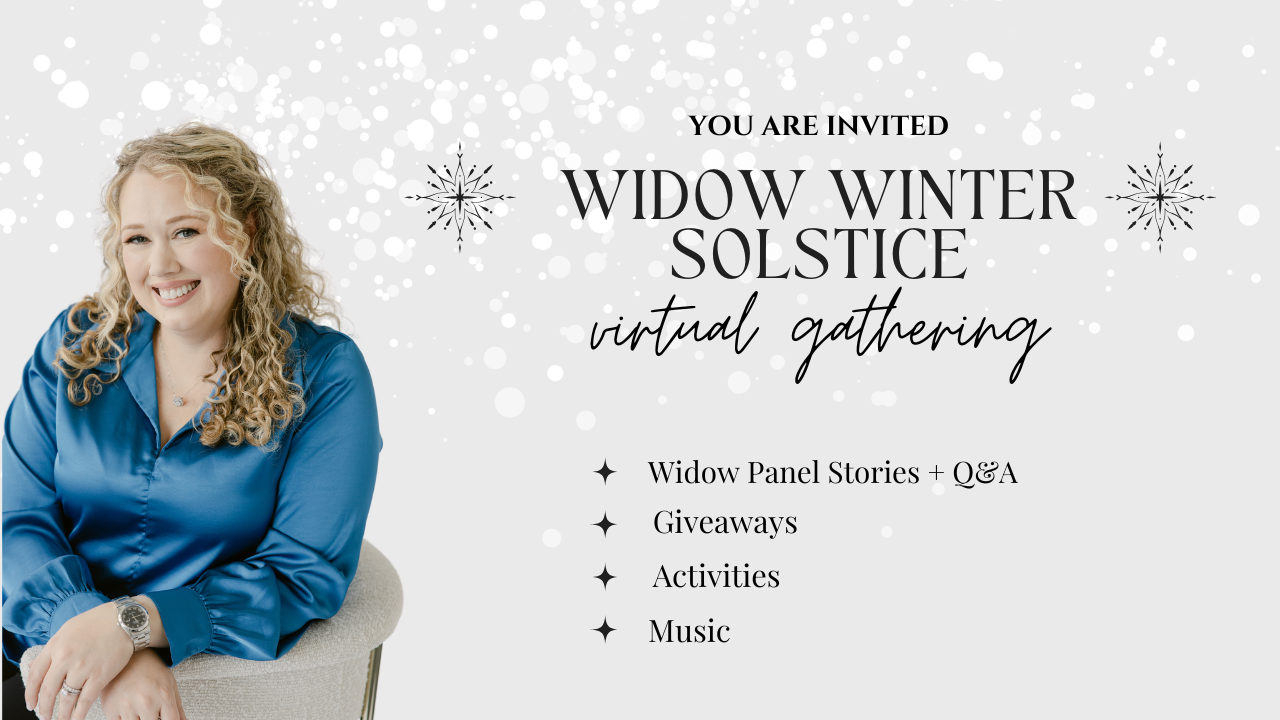
BW 192: He Died On Our Dream Trip To Greece: Jen’s Widow Story & Finding Community Again
Apr 21, 2026[TRANSCRIPT BELOW]
MENTIONED IN THIS EPISODE
Connect with Jen
- Website & contact: https://www.itslifey.com
- Facebook: https://www.facebook.com/profile.php?id=61573198074373
- Instagram: https://www.instagram.com/itslifeyco/
- YouTube: https://www.youtube.com/@ItsLifey-co
Brave Widow Resources Mentioned
- Apply for Brave Widow Academy (next group starts July)
https://bravewidow.com/academy - Join the free Brave Widow Community + weekly calls and prayer nights - https://bravewidow.com/free
- Schedule a no-pressure call with Emily to figure out your best next step - https://bravewidow.com/call
What happens when your husband dies in front of you on your dream vacation in Greece… and you’re completely alone on an island with no 911?
In this episode, Jen Newberg, founder of It’s Lifey, shares the night her husband Jack died in their hotel room, the chaos of navigating police and embassies in a foreign country, the crash that came when she tried to “go back to normal,” and how that pain turned into a lifeline of retreats and community for widows who feel alone.
If you’ve ever wondered, “Am I normal? Will I ever feel like myself again?” this conversation is for you.
In this episode:
- The night everything changed on a “perfect” trip to Greece
- Trying to save Jack with CPR while medics were still being found
- Coming home to 850 people at the wake and an empty bed at night
- The panic attack that sent Jen to the ER and why she took short‑term disability
- Why “you cannot do this alone” became the heartbeat of It’s Lifey
- How retreats, support circles, and vetted resources help widows breathe again
- Practical ways to ask for the help you actually need (beyond flowers)
Chapters:
0:00 – Welcome & Brave Widow Academy July 13 invite
2:32 – Meet Jen Newberg, founder of It’s Lifey
3:18 – Jen’s blended family & “imperfect” but loving marriage
6:55 – “I think I’m having a heart attack” on a Greek island
7:40 – No 911, scrambling for help & Jack’s final moments
9:58 – Flying home alone & facing the wake and funeral
15:45 – Panic attack, ER visit & taking short‑term disability
18:20 – The retreat that inspired It’s Lifey for widows
19:15 – Widow retreats, support circles & community that “gets it”
22:30 – Building a trusted resource network for widows
27:55 – Becoming more whole and confident after loss
29:05 – How to connect with Jen & It’s Lifey
32:40 – Brave Widow Academy: next steps if you want a roadmap and community
💛 Ready for deeper support?
Brave Widow Academy is my 6‑month, faith‑based program to help you heal your heart and rebuild a life you can love again. Small group, step‑by‑step roadmap, and weekly support. Learn more and apply here: bravewidow.com/academy
Subscribe for more faith‑based, hopeful grief support for widows:
@BraveWidow on YouTube, TikTok, Instagram & Facebook
💬 If this episode helped you, please:
- Hit Subscribe
- Leave a quick rating & review – it helps more widows find this support
- Share this with a friend who’s facing grief or the holidays without their person
If you’re new here, my name is Emily Tanner. I’m the founder of Brave Widow and Brave Widow Academy.
I help widows move from barely surviving their loss… to rebuilding a life they can actually love again without feeling like they’re betraying their person.
By day (and for 20+ years), I’ve led large teams and complex operations in the corporate world.
After my husband Nathan died in 2021, just shy of our 20-year anniversary, I took everything I knew about leadership, systems, and change — and started applying it to grief.
Since then, I’ve:
Shared my story publicly to make widows feel less alone.
Launched the Brave Widow podcast, now with 180+ episodes and listeners around the world.
Coached hundreds of widows 1:1 and in groups, and talked with thousands more through the podcast, communities, and events.
Built Brave Widow Academy, a 6-month coaching program with a clear framework for moving from deep grief to rebuilding a life you can love again.
I don’t teach “just think positive” grief tips.
I teach widows how to:
Heal their heart.
Stop waiting on “time” to fix everything.
Take small, brave steps toward a life that feels meaningful again.
How I Got Here…
2021: My husband Nathan dies unexpectedly. I’m 4 kids in, overwhelmed, and drowning in paperwork, decisions, and pain. Therapy helps, but I still feel stuck with no roadmap.
2021–2022: I start devouring books, interviewing widows, trying grief groups, and studying coaching — desperate to find something that actually helps me feel different.
2022: I start the Brave Widow podcast, recording episodes while terrified and crying between takes — but determined that no widow should feel as alone as I did.
Year 1: I begin coaching widows 1:1. Word spreads quietly. The same patterns and problems keep showing up, so I start building frameworks instead of one-off advice.
Year 2: I launch Brave Widow Academy — a structured, 6-month coaching program with a step-by-step path: from deep grief, to stability, to rebuilding.
Year 3: Brave Widow has listeners around the world. I’ve personally coached hundreds of widows and spoken with thousands more through consults, lives, emails, and DMs.
Today: My work is simple:
Help widows stop surviving each day… and start rebuilding a life that makes them genuinely glad to be alive again.
TRANSCRIPT:
[00:00:00] Hey. Hey, and welcome to another episode of The Brave Widow Show.
Today I'm excited to bring to you a conversation with Jen, the founder of It's Lifey and myself. And real quick before we dive into the discussion, I just wanted to share that our next round of Brave Widow Academy is starting July 13th from five to 7:00 PM Central Time.
And we already have four amazing widows signed up to start in July, and this container will be limited to 20. So we've already got four out of 20, who are signed up and committed to start in July. And I would love to be able to welcome you to that group. If you wanna learn more, just go to brave widow.com/academy to learn more and apply to join us. For widows who decide to join early to commit to the program and prepay in full, I'm also gifting. An [00:01:00] additional eight weeks of one-on-one coaching with one of our trained Brave Widow coaches. So this is my way of helping to bridge the gap between where you are today and when you start the academy over in July.
As most of you know, I love to generously gift bonuses for people who take quick action and join early. So this is one way that I wanna help give you the individual one-on-one support that you need between now and July, and that's gonna end sometime in May. I'm not exactly sure when, but the sooner that you apply for the academy or even schedule your free.
One-on-one consult. To learn more about the academy [email protected] slash call CALL, then I'll make sure that I lock that bonus in for you.
So again, if you're interested, go to brave widow.com/call and [00:02:00] schedule some one-on-one time with me, and I would love to help you decide whether or not this is the right fit for you. All right, before I dive into my conversation today with Jen, let me introduce you to her.
Jen Newberg is the founder of it's Lifey. She's a communication and partnerships executive with experience leading mission-driven campaigns for brands like T-Mobile Purina. Dove Planet Fitness and more. Her superpower is connecting people, and she specializes in building authentic value-based connections.
Drawing from her own journey through life transitions specifically to the loss of her husband. In 2024, Jen founded its lifey to ensure that no widow ever has to feel alone. She believes there's no playbook for life, but that with community and shared experience, we can find our way through. All right.
Let's dive into my conversation with Jen.
Speaker: Jennifer, thank you so much for joining me [00:03:00] today and for being willing to come and share your story.
Speaker 2: Thank you so much for having me. Yes, I, I really believe that sharing your story, it's one way to help people feel seen and heard, so I am blessed to be here.
Speaker: Awesome. I totally agree. And that's what helped me when I was first a widow, was just hearing other people's stories and wondering, am I normal? Will I get through this? Yes. And so I do believe our stories are so powerful. I know our audience would love it to, to learn a little bit more about you, if you would just introduce yourself and then we can dive into your story wherever you wanna start.
Speaker 2: Absolutely. Um, so my name is Jennifer Newberg. I, um. I grew up in South Florida. I, um, moved to New York City when I graduated college. I lived there for a couple years and I've been in the Boston area now for, gosh, I guess it's been about 22 years now. So this [00:04:00] is home to me. And I met, my husband Jack about 15 years ago.
Um, we actually met online on match.com.
Speaker: Nice.
Speaker 2: Um, so I always, you know, I know dating apps are what they are, but this one worked. Um, and in fact, I always love to share that he reached out to me and I did not respond, and then he reached out to me again and it was my friend who was like, this guy is great.
Like, what's wrong with you? Um, and so I did, you know, obviously end up responding and that began. Our story together, we had, it was a second marriage for both of us, and so we had a blended family. I have a daughter who's 16 and he has a daughter who's 18 and a son who's 20, but they were very young when they met.
They were two, four, and six. Um, so we were a blended family since, you know, they were a very young age and that obviously [00:05:00] presents its challenges as well. And so. I always, um, share that while there was incredibly deep love, you know, there were a lot of challenges as well. Um, and you know, I think that, um, I find that a lot of widows that I talk to in my own community, um, relate to that and.
You know, it kind of gives them the, oh my God, I'm not the only one that doesn't have this like perfect idyllic marriage that ended in tragedy. Um, you know, nothing's perfect. There is no such thing as perfect, but ours was imperfect. Um, and that's just the truth of it. , We, were gifted a very generous gift, to go to Greece.
It was for a combined birthday present and it was top of my bucket list, something someplace I'd always wanted to go. And I spent about a year, planning the trip and I am a planner, and so I [00:06:00] had spreadsheets and binders and you name it, I had every, you're speaking my love language. I had every reservation booked.
I probably drove myself insane, researching every little thing. Um, but I liked doing that. So it was, it was kind of fun. A little stressful at times, but fun. I think he thought it was insane when I handed him the binder and was like, here's our trip and. That's Wow. So, um, we took off to this magical vacation and we spent four beautiful days, in Greece.
And we spent four beautiful days in Athens and then we traveled to Konos knows and,
it was the fourth night we were there and went to bed, went out for a great dinner, went to bed, and around four o'clock in the morning he woke me up and he said, I think I'm having a heart attack.
Speaker: Hmm.
Speaker 2: And he had, was a very healthy person. Um, no, no signs of heart disease or anything of that sort.
And [00:07:00] so I ran downstairs. I, um, I said, this is the receptionist of the hotel. I said, we have to call 9 1 1. My husband's having a heart attack, and he said, we don't have 9 1 1. You are on an island in the middle of the Mediterranean and um, it was just slightly off season. We were there just before season started and he said, I don't even know who to call.
Oh. And I said, my husband's dying upstairs. And so the two of us went up and he was making calls, trying to find medics or medical professionals and, we, with somebody on the phone, it was actually my dad on the phone. We, hodgepodged, CPR, did the best we could and he died within 10 minutes.
Mm-hmm. Of us going back up there. The medics came about 20 minutes later. Did what they could. But it was, it was pretty much too late at that point. And I know everybody has a different story of how their partner or spouse [00:08:00] passes, but in my case I watched it happen and while all of it is trauma and nobody's trauma is better or worse than others, like, to me that was the epitome of trauma was watching the man that I love.
Die in front of me.
Speaker: Yeah. And you had to have felt like just so helpless. And I can't even imagine.
Speaker 2: I was alone in a foreign country, where most people spoke English, but not everyone. And my first stop that I had to make was to the police station. Mm. Because a man had died in my hotel room. And while I can understand it now, at the time it was just.
Chaos., And thank God the owner of the hotel we were staying at was a really kind man and he went with me, he was my translator. And while I was at the police station, I was going in between answering questions and calling family. And so it was about five o'clock in the morning, in Greece, [00:09:00] and I guess it was probably about eight o'clock at night here in the us.
And so I had to call his mom. Had to call his sisters. We had to make a plan on how to tell our kids, which we didn't do until the next morning. But it was kind of amazing at how everybody just did what they needed to do. Like it was like organized chaos. Like everybody came up with a plan.
Speaker: Right.
Speaker 2: And at that point my dad and my sister-in-law were gonna fly out to meet me, but I was luckily able to fly back to the US pretty quickly.
And so it was kind of. Silly for them to come turn around and go back, which I will say was a big regret of mine. Flying home, by myself was pretty, pretty horrific, for lack of better words. But I made it and I got home. And again, we had a plan on telling our kids. And by the time I had gotten home, it was already about a day and a half, almost two days since he had passed.
And I walked [00:10:00] into a house of. Craziness. There were so many people here. Our family was here, friends were here, and I remember getting out of the car and just sitting down in my front yard and my kids came out and his best friend came out. And we sat there for a really long time because I just wasn't ready to go inside.
Speaker: Mm-hmm.
Speaker 2: That's. The beginning of the end, I guess you can say. Eventually I came in and I feel grateful I had a lot of support. But as most widows can understand, sometimes you want it, sometimes you don't. People try and be helpful, but they don't always know how, and. It's like this tug of war between like, I need people and leave me alone.
Speaker: Right?
Speaker 2: I do feel very grateful that I at least had that opportunity to choose and that people were very respectful of what I needed. From that point over the next two weeks, I would say was. Getting his [00:11:00] body transported back from another country. I did have to do a lot of work with the US Embassy in Greece.
Um, his autopsy and, um, we had him cremated. That was all done in a, um, funeral home in Greece. Mm-hmm. Um, and so navigating some of those logistics was a little bit crazy, but again, I had a lot of people to help me with it. Um, and so, um, grateful for that and then planning the funeral. Um, the wake, I always tell people because I think this is just test a testament to who he was.
We had 850 people at the wake.
Speaker: Wow.
Speaker 2: Which, um, and we chose, and I don't know if this helps helpful to other people as they navigate this, but we chose to do a wake where anybody could come. And then a closed, um, mass funeral because we didn't want it to be chaotic. Right. Um, and then we did a celebration of life [00:12:00] after, where once again, anybody could come.
And so we kind of had to find that balance between allowing everybody to grieve and acknowledge his death, but also keeping some space, um, for our family.
Speaker: And that's amazing that you were able to think through that, especially just given. How overwhelming at times it must have felt to be juggling a different country.
And then I'm sure there are rules about transporting remains and mm-hmm. Just having to navigate that and the frustration of like, I shouldn't have to be figuring this out and, and why did this happen now? And like, I, I'm sure that was really hard, but it sounds like you did a beautiful job of thinking through.
Creating something that allows everyone to participate but also supports you and your family and just the intimacy and the closeness of the time that you needed to.
Speaker 2: Yeah, I, I had a lot of help. I [00:13:00] find that I am a glass half full type person. I automatically assume that people are kind. , And I know, while that's not always the case in this world we live in.
The kindness was overflowing. And so I am appreciative of that, you know, to no end. And, I had a lot of people by my side to help navigate it. I, share, you know, I. Work, um, I shouldn't say work. I, um, have the beautiful opportunity actually to meet a lot of widows and to talk to them and share our, each of our experience, strength, and hope.
And I share one of the biggest lessons I learned, and it's something that I had known for a long time, was that we can't do this alone.
And I know not everyone has close family and friends, but there are other people, even complete strangers who. Are willing to step up and help. And I think as women in particular, and you know, I think [00:14:00] just we think that we need to do it all and figure it all out on your own and it's humanly impossible.
There are so many logistics and so many, as I heard once widow chores, um, I've, I've taken that phrase. I'm like, there's just a lot. It's a lot. It's, it's a lot.
Speaker: It's overwhelming. Yeah. And it's often things that we didn't have to do, and now we're also navigating and figuring out that. So it is very overwhelming.
Speaker 2: It's incredibly overwhelming. Again, like I said, I share my story so that people can feel seen and heard and understood, like you're not. Crazy. If you're can't get outta bed during that time, you're not alone if you're completely manic and can't stop doing things because it's the only way that you can cope with what's going on.
Like, everybody has their ways of, of dealing with things. And um, so, you know, after all of that kind of initial couple of [00:15:00] weeks went by, um, I had worked for, um. A pretty large nonprofit. I had a job that I loved and I thought it would be a really good idea to go back to work because I loved my job and it would keep me busy and, um.
I lasted about 10 days. And again, my employer and employees, you know, my colleagues were, were wonderful. Um, and I had a little bit of a nervous breakdown. I think it was like it was a crash,
Speaker: right?
Speaker 2: And, um, I actually, and I also speak very openly about this, I drove myself to the emergency room. Hmm. And I just said, I need help.
And I was in the middle of a full blown panic attack. I didn't know what that was at the time. Um, I thought I was dying. Um, and um, you know, they took me in and helped me kind of settle down and navigate some things. Um, and needless to say, I did not go back to work after that. And I was able to take short-term disability, which [00:16:00] I also share from a more practical standpoint that.
Most, um, you know, workplaces of significance do have short-term disability and it is an option. I don't think people know that. Um, I think a lot of people think of short-term disability mainly for, um, disabilities or illness or accidents or what have you, but you can use it, um, when you lose a loved one.
And so. I was able to take three months off work where I was still paid, not a lot, not my full salary, but at least enough
Speaker: some. Yeah.
Speaker 2: And then I extended it another three months, um, because again, I just wasn't ready to go back to.
Speaker: Yeah. Yeah. Which I think is very common. I think the statistic I'd read at one point was that for\\ widows who work.
At the time that they're widowed, that around 85% either end up changing careers or changing jobs or changing industries altogether. Like there's just a, I don't know if there's an apathy or there's something that [00:17:00] happens that causes people to want to desire some sort of change or feel that that something needs to be different.
And it sounds like you had a lot of great support from your employer, which is awesome. And not a lot of people. Can experience that and also while going through what is a super overwhelming process, you also started some things to be able to give back to widows and to help other widows, which is one of the reasons why I stopped hating being called a widow because I saw how generous and resilient this community is with.
Wanting to help other people when they had every reason to be angry at the world and to feel that life is unfair and, close themselves off, but so many of them don't including you. Do you wanna share a little bit about that?
Speaker 2: Yeah, absolutely. I already, I'm a part of various communities that [00:18:00] I, um, where I learned that community is.
Incredibly important and where people carry each other when they can't carry themselves and judgment free come as you are. And I wanted to build something I wanted. I first thought that for myself and. It wasn't that there was nothing, there were communities for widows and, and opportunity, you know, opportunity is the right word, but places to be a part of it.
But it wasn't exactly what I needed. And so, um, me being me, I decided to do it myself. But it really started because I went on a wellness retreat, um, the November after. So Jack died in May. It was November. And I was like, I need to get out of here. This is too much. And so I signed up for this retreat. It was a yoga retreat.
I don't do yoga or I hadn't done, you know, maybe once or twice, but it wasn't part of my thing. It was purely just, I need to get out of here. And it [00:19:00] was on that retreat. Um, the women that I was with were really lovely. Um, they were much younger than I was, but I left, you know, with the. Gratefulness that I got to get away, but also this craving for I, I had wished other people had got, had got what I was going through on that retreat, which brings me to the phrase I use all the time, which is being with people who get it right.
And so I said, well, why don't I create a retreat for widows? And that really began what's now my company, which is called it's Lifey. It began by planning a retreat. It then grew to running support groups throughout Massachusetts., Building an online platform where widows can connect. And interestingly, it's now doing a little full circle moment where I'm going back towards the in-person retreats, support groups, um, community, even if it's online, more community [00:20:00] based. Programming, I hate to use that word. It sounds so stale., I just learned the magical nature that like when strangers come into a retreat on a Friday and they leave as the closest friend you could possibly imagine, it's the most beautiful thing. And so I've now hosted two retreats. I have another one,, next month that sold out in a week.
Amazing. Which was, what the first two, I was like, so stressed out, finding type of people to come. And then this one kind of fell into place. And I'm actually, this morning I spent two hours already planning, a summer one. And then I'm planning, more of an event style, gathering in the fall, which will feature keynote speakers and have breakout sessions.
I was not a huge, holistic s. Wellness person beforehand. I thought some of it was a little woo. Sure. But I've come to appreciate it and I know I've seen how much it helps other people. And even if it's, [00:21:00] you know, some of it's my thing, some of it's not. It doesn't matter. It's not all about me.
And I've seen it help a lot of people. So I try and incorporate a lot of those wellness and I bring in, I don't do it myself. And I also am very clear that I am not a therapist. I'm not a coach, I'm just a widow. Mm-hmm. Um, who understands and who brings, I'm a, I'm a community builder. I'm a gatherer.
Okay. And so, and so I bring, you know, people together, widows, I bring practitioners, holistic practitioners together. And, we experienced this really beautiful time together. As an entrepreneur, which I never thought I would do either. By the way. The idea of starting my own business was like never a part of my mindset, let alone eight months after my husband died.
But I found it to be healing for me. And for other people and, of course I have my moments where I'm like, I'm out. I can't do this anymore. I need to, like, take care of myself. And I do. I, um, have [00:22:00] put a lot of effort, especially in the last couple of months, to taking care of myself and dealing with my own grief and trauma, um, which has been really helpful.
So it's life he was born and it continues to thrive and twist and turn and, here we are today, again, running retreats, running events. I'm starting, I'm kicking off a monthly, um, widow meetup at restaurants or you know, where I'll have, you know, speakers or experts come in. I really like to provide, I've worked really hard to build a network of resources and those resources for widows because.
God knows what it's like to sit there and Google, I need an estate attorney, or I need a financial advisor, or I wanna sell my house. And so I've created a network of people that I vetted and that I trust that kind of fill all of those holes in addition to therapists and healers and whatnot. And so, um, that was really important to me to be able to provide that to people so that when someone says.
I need someone, I can just say, [00:23:00] okay, call Danielle or call Deb or call Joanna. Um, and so that's also been a big part of this business model is being able to provide resources Yeah. Um, to other windows.
Speaker: Yeah. That's, that's awesome. And I know it's something that's definitely needed. I talk about it like building your board of advisors.
You need experts in different areas to help you make decisions. And so for people to just be able to get some exact recommendations, I know has to be a weight off of their shoulders. So it's definitely needed. Yeah.
Speaker 2: I find that there is, obviously horrific trauma and sadness and brokenness that you're like, it's interesting you referenced this statistic about people changing careers or job.
It's because we are different people. Mm-hmm. When something like this happens in your life, you fundamentally change as a human being and your values and your. Morals to some degree, and you know, how [00:24:00] you communicate with people, how you be with people. It, it really shifts. And so I, it's not surprising to hear that statistic that people look for different career paths because that is part of our lives. It's kind of, um, a little bit of a process of putting yourself back together. Um. I hear people all the time, especially new widows, who will say, did you ever wish that if you did this, then your partner wouldn't have gotten this or died from this, or whatever it is. And it's like, yeah, of course.
And they're like, oh, thank God I'm not crazy. Because I think that keeps me up at night. Like if, if I, you know, the, if I only Oh yeah. Um, or the, how am I going to move forward? Well let you know. It's baby steps and it's listen to people on your podcast and in other communities and listen to how they moved forward.
Mm-hmm. And you know, even if you take a little tiny nugget from that, you know, you build your, your sense of [00:25:00] self. Um. From that.
Speaker: Yeah. Yeah. I totally agree. And, and just even just knowing that what you're experiencing is normal and there's nothing wrong with you, like that was, that's a big piece I think for other widows because they worry, they don't do grief.
Right. We also know that people around us just don't understand grief, don't know how to support us, and so a lot of times they're the opposite of helpful with Right, right. Giving us advice and feedback, so having that community and that place. Or you can talk with other people about your experience and they're like, oh yeah, I struggle with that too.
Or, that's been a problem or challenge. Like it's very normalizing for people.
Speaker 2: Absolutely. And I'm, I'm a very open, honest, transparent person and I will tell you, um, a lot about my feelings and my experience. In fact, I often share that I didn't really cry for a year, which people are like. I can't stop crying.
And so, but yet there are other people who are [00:26:00] like, oh my gosh, me too.
Speaker: Right?
Speaker 2: It just, that was my process. Um, you know, that's, you know, my, I think my brain was just an overdrive and, and then it hits and, you know, it was, for me it was a big crash. Um, but it was okay because I knew what to do with it. I had already.
You know, had the resources around me and I, I knew what to do with it. And I encourage people if you don't know what to do with that crash, like talk to other people, find people who have experienced that as well. Um, and you know, I've also just been really inspired by these incredible women who have been through.
Traumas just like I have who have built really beautiful lives. In fact, um, I did a session, um, once, I had a guest once, um, who started the session with saying, grief is beautiful, and I had about six or seven women online and everybody like. I think if they could crawl through the [00:27:00] screen would've like punched her in the face because they're like, wait, there is nothing beautiful about this.
But by the time we got to the end of the session, you could see those glimmers of what your life can be, even though you're missing the person that you love the most.
Speaker: Yeah.
Speaker 2: So there is a little bit of beauty in the transformation of yourself, your identity. There's pain as well, and loneliness and all the yucky stuff that like none of us want.
But,, I, I believe it can be a journey. I actually believe that I am a. Much more whole clear, confident person today than I ever have been in my life. And I am thankful to Jack for helping me get there. I, I think that he helps me, guides me every day to be the best person I can be. Um, and, you know, at least that's just my perspective.
It, he's kind of saying, you know, I know I can't be there, but. I'm gonna help you through it.
Speaker: [00:28:00] Yeah. That's amazing and we'll put all of your links and, social media in the show notes, but what would you say is the best way for people to find you or to connect with you?
What's your like, preferred way?
Speaker 2: It's lifey.com, I-T-S-L-I-F-E-Y. And um, that name came from the phrase, life gets Lifey.
My original mission was to help create communities for people going through different life transitions.
I realized, that I was trying to boil the ocean with that one. Um, and so I have, taken the experience that's probably been most profound in my life. And trust me, I have had other experiences as well. Again, not enough time to go through that. Um, you know, I have been divorced. I am in recovery for addiction.
From addiction. Like I have had, like I've, I've had a lifey life. Yeah. Um, but, um, you know, it's life here right now is really, um. Focus to on supporting widows. And so that's, you know, my contact [00:29:00] information there. You can see what events are coming up. You can join my online platform, which, um, secret preview is going to turn into a free platform starting in two weeks.
Um, and, um, you know, I am in the middle of planning my next retreat, which will be this summer in Cape Cod, um, in Massachusetts. Um, amazing. It's going to be. Um, a lot more luxury, I guess you can say. Again, it'd be, I'm not always the best at words, but like. It's gonna be amazing. Not that the other ones aren't.
Um, but, um, know, again, you're taking it up a level. I get it. You're taking it up a I love that. Yes. I think I might actually use that copy. Thank you. Um, you know, taking it up a level and then again, the, the, the event that I planned to have, um, in the fall. And, you know, I, I think one testament to the retreats is that, so this is my third one and I have two women who've been to all three.
And I have two women that have been to two, and that to [00:30:00] me just shows, um, how valuable it was to them. Um, I'm like, I can't believe you're coming back again. And they're like, I wouldn't miss it. Like, what are you talking about? Awesome. So, um, and then I also have people in this particular retreat that I'm doing in a month, flying in from all over the country.
Um, which is also like, oh my gosh. Um, but that's what I did. I mean, my retreat was in Costa Rica that I went to. I was like, I am out, totally out here. So, um, I get that, that need as well. Um, but yes, you know, my, my mission continues to be to bring together people who get it, who can learn from each other, um, who can use each other as resources.
Your podcast is certainly. One of the ones that I drive people to, to hear other stories like mine so that I don't feel alone. And I, admire you for taking on this initiative. It's not, I know it's not easy, and, you know, doing it so beautifully, and honestly and [00:31:00] truthfully.
Speaker: Well, thank you. I think what you, you said when you were talking about entrepreneurship, one of the quotes I heard from someone that I follow was that, you know, the success in entrepreneurship isn't how much you can do.
It's how much you, how much pain can you tolerate. While you're doing it. And I'm like, oh, that is so true. Like, you know, we can
Speaker 2: tolerate
Speaker: a lot now.
Speaker 2: Is there anything else that I can share that would be helpful to your listeners or to you?
Speaker: No, I, I think this is great. Thank you so much.
Speaker 2: You're very welcome. Thank you for having me. And again, I am an open book. Please. I encourage anyone to reach out to me in any way. Um, and I am, I'm happy to help because, you know, as I said in the beginning, we cannot, it is impossible to do this alone.
And, you know, people are kind. They do wanna help. Sometimes you need to tell 'em exactly what to do. That's a whole nother story. You know? They're like,
Speaker: yeah,
Speaker 2: you know, I mean, my house is a floral shop. When Jack died [00:32:00] and I was like, I don't need any more flowers, like I need. Food, or I need someone to clean my basement or the dog poop in my backyard.
Like,
Speaker: yes,
Speaker 2: there was like, you know, a plethora of things that I needed help with that were not flowers, um, nice gestures, but, uh, but yeah, no, that's, that's another kind of lesson that I, I learned is um, when you ask for help be specific. So, um, but yeah, I mean, it's a journey. It has its ups and downs. Um, but there are ups.
And if I can, you know, I'll kind of end with that, that, um, you know, it's the most horrible thing that happens in your life, but it doesn't have to be what determines the rest of your life.
Speaker: Yeah. Yeah. And I love what you said about there is beauty and who we are becoming. Mm-hmm. And our growth and how we transform through this journey.
Um, I absolutely agree with that. So thank you.
Speaker 2: Thank you so much. Thank you for having me.
Speaker 10: [00:33:00] The Brave Widow Academy is open now, and it's where I help widows just like you move from surviving to living with a proven path coaching and a community of other widows who get it. If you're ready to take the next step, go to brave widow.com/academy to join us. I'll see you on the inside.