BW 188: Hospice Nurse: What Death Taught Me About Grief & Hope
Mar 24, 2026[TRANSCRIPT BELOW]
What do hospice nurses see at the end of life that most of us never talk about?
In this conversation, hospice nurse and GLADD founder Christa McDonald, RN shares what thousands of deaths have taught her about grief, regret, love, and how we can live (and grieve) differently.
If you’re a widow who feels like you’re “supposed” to just get over it, this episode will give you language, perspective, and permission to grieve in a healthier, more hope-filled way.
In this episode, we cover:
* Why we live in a grief-avoidant culture and how that hurts widows
* “How you live is how you die” and what that means for your next chapter
* Christa’s story of walking with death from age 13 and how GLADD was born
* What hospice nurses actually see and why many patients experience peace
* Practical ways to honor your person and stop feeling guilty for still grieving
Timestamps:
00:00 – Welcome & who Christa is
01:00 – Teen volunteer to hospice nurse: how death “found” her
06:00 – “We are a grief-avoidant society” and the cost of pretending
10:00 – The story of Christa’s stepdad and the birth of GLADD
15:00 – What hospice nurses notice at the end of life
18:00 – Signs and comforts near death (and why they matter for the living)
22:00 – Why “just get over it” doesn’t work & what to do instead
26:00 – How to connect with Christa + next steps with Brave Widow
Connect with Christa:
GLADD Community: https://gladdcommunity.com
Instagram: https://www.instagram.com/grievewithchrista
Next steps:
1. 🎯 Find your season of grief (free quiz): https://bravewidow.com/quiz
2. 📅 Join the live “4 Seasons of Grief” webinar: https://bravewidow.com/live
3. 🤍 Explore Brave Widow Academy: https://bravewidow.com/academy
If you’re new here, my name is Emily Tanner. I’m the founder of Brave Widow® and Brave Widow® Academy.
I help widows move from barely surviving their loss… to rebuilding a life they can actually love again without feeling like they’re betraying their person.
By day (and for 20+ years), I’ve led large teams and complex operations in the corporate world.
After my husband Nathan died in 2021, just shy of our 20-year anniversary, I took everything I knew about leadership, systems, and change — and started applying it to grief.
Since then, I’ve:
Shared my story publicly to make widows feel less alone.
Launched the Brave Widow podcast, now with 180+ episodes and listeners around the world.
Coached hundreds of widows 1:1 and in groups, and talked with thousands more through the podcast, communities, and events.
Built Brave Widow Academy, a 6-month coaching program with a clear framework for moving from deep grief to rebuilding a life you can love again.
I don’t teach “just think positive” grief tips.
I teach widows how to:
Heal their heart.
Stop waiting on “time” to fix everything.
Take small, brave steps toward a life that feels meaningful again.
How I Got Here…
2021: My husband Nathan dies unexpectedly. I’m 4 kids in, overwhelmed, and drowning in paperwork, decisions, and pain. Therapy helps, but I still feel stuck with no roadmap.
2021–2022: I start devouring books, interviewing widows, trying grief groups, and studying coaching — desperate to find something that actually helps me feel different.
2022: I start the Brave Widow podcast, recording episodes while terrified and crying between takes — but determined that no widow should feel as alone as I did.
Year 1: I begin coaching widows 1:1. Word spreads quietly. The same patterns and problems keep showing up, so I start building frameworks instead of one-off advice.
Year 2: I launch Brave Widow Academy — a structured, 6-month coaching program with a step-by-step path: from deep grief, to stability, to rebuilding.
Year 3: Brave Widow has listeners around the world. I’ve personally coached hundreds of widows and spoken with thousands more through consults, lives, emails, and DMs.
Today: My work is simple:
Help widows stop surviving each day… and start rebuilding a life that makes them genuinely glad to be alive again.
TRANSCRIPT:
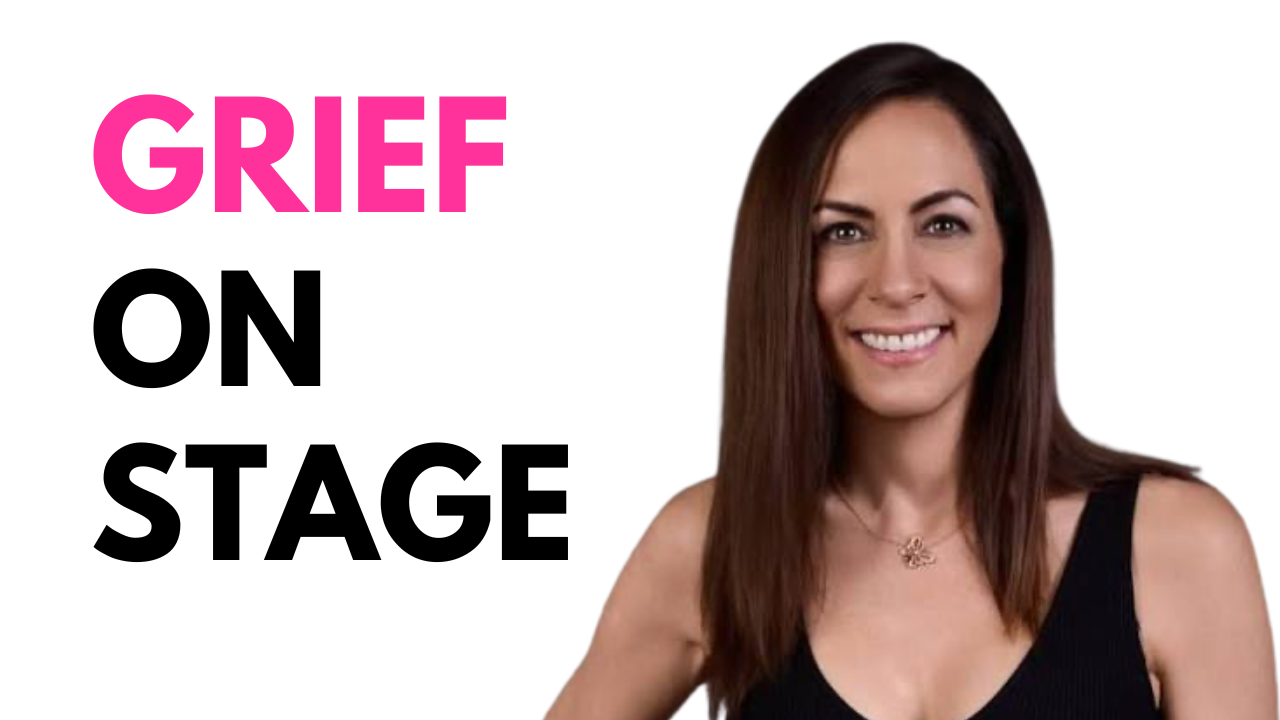
Speaker: [00:00:00] Hey, hey, and welcome back to another episode of The Brave Widow Show. Today we have a special guest, Christa McDonald. So let me introduce you to her. Christa McDonald RN is a hospice nurse, author and founder of GLADD for over two decades, Christa has walked beside the dying, witnessing death in every form, and discovering that the end of life is often life's greatest teacher, a hospice nurse, author of the Eight Lessons The Dying Taught Me, an owner of a private hospice Home.
You can find her at GLADD Community with two ds G-L-A-D-D community.com or on Instagram and I'll put the link in the show notes.
Let's dive in.
Emily: Christa
Speaker 2: I know our audience would love to know a little bit more about you and your story and all the amazing things that, you've been doing. So if you don't mind, let's jump in your story, wherever you wanna start.
Speaker 3: I always start from when I [00:01:00] was a teenager.
'cause I always tell people I didn't choose this work at all. My mom is a retired nurse, so from the age of 13, I started to go to the hospitals with her. And, every weekend I tell people seven to three, I was a, a volunteer. And I got, um, close to a patient there that was there for about eight months in the hospital, Lucy.
And she had no family. We got really close and one day I came in and, and she wasn't there. And, um, the nurse said to me, Lucy, Lucy died and she was in room 3 0 6. And I remember, you know, that day, I remember seeing that 3 0 6 all over in just weird places. And, um, you know, my mother said, get over it. People die.
You know, she was a nurse for a long time. And I'm like, how do you just get over that? And I just remember that so fast forward to the age of 16. I was in school to be, I was in 11th grade. I was in school to be, um, a nursing assistant. And I, I always tell people, I never forget it. I was born in New York, so I was in New York, I was in Bellhaven nursing home and I was.
Taking care of Mary this day. [00:02:00] And Mary, I had her for a few days and she was kind of a nursing home patient, just bedbound, kind of just laying there. She needed, you know, all care done to her. And I had her on her side and the teacher came in and was like, Krista, Mary's dead. And I'm like, Mary's dead. And I didn't realize it.
So as I was watching Mary, Mary just peacefully passed away. Um, after that I became an EMT at 18 and saw, you know, traumatic death. I worked in the emergency room from 18 to 20, uh, two till I got my rn. And I just saw people die in traumatic ways. Um, you know, I worked in the nursing home too from 16 to 17 and it was like every night somebody passed away.
So I just, I was just around death. Um, from the age of 16 to 19, I helped all three of my grandparents on hospice. Um, so. Once I became my, I got my RN and uh, I had my first son when I was 23. 'cause I always tell people, it got all the deaths. I had a little bit of PTSD, it got traumatic, just carrying all the weight of this.
And my mom just kept saying, get over it. [00:03:00] Get over it. I'm like, how do you get over like all these, this, you know, this death. So I had my first son and um, at 23 and maybe like a year later, I wanted to stay home with him and a nurse said, just go do home care and the visiting nurse service, you go house to house, you see different patients.
And um, the day that I started, the hospice nurse was actually dying and they said, Krista, you're gonna be trained to be the hospice nurse. And I think I was about to say 4 25. And at that time, maybe there were six or seven patients and they were like, you can't go in. With the logo, you have to, you can't have a company car to have the logo.
We had to go in, like, we were just regular people because back then, so we're going back into, what is this, 2004? You know, we could go back into, you know, the two thousands, early two thousands where people didn't wanna talk about death. And it's just like, get over it. You know? And I, and I started to become a hospice nurse, and I noticed this, right, that we live in a grief avoidant society.
And it's like we talk about birth, but then when somebody dies, nobody's there. People run away and everybody has an excuse [00:04:00] because it's hard. Right? When, when we talk about death and grief, we talk about our own mortality. So I just, I, I just saw this and I saw people grieving in different ways. I saw, I just have, I noticed all this, and at this point it was, you know, I'm at, I'm 45 now, so I've helped thousands of people.
And just, you know, on my journey, I really, um, I tell people that how you live is how you die, right? So I believe that that grief becomes easier sometimes of who we, um, who we are, so I, I like to tell people too, I'm like, live, live life. Like you're, writing your legacy, you know? 'cause I've seen, I've seen, you know, wives, I've seen a lot of, um.
Wives that, you know, were like, oh my God, I'm happy my husband passed. And I'm like, you're happy. And he was a mean man, right? He didn't do the right thing. And then I saw different ones that loved that. You know, I just saw grieving death in so many different ways. And I really come, it comes down to, um, you know, even helping people like with, with grief, that's, it's not always easy.
And people say, well, how do you do it? I like to do it. Well, you're still [00:05:00] alive. Right? And I think that every day we have that opportunity to do that. Right. And I, I always kind of tell my boys, I have two boys, and I'm like, just live above the line and, you know, be the right person. Right. Love, be be honest, be truthful if we start there.
Right. Because grief, it's, it's not, it's not always easy. And I think, um, my story happened, right? Having all of this, this happened. A year ago, it's less than a year ago. Um, my stepdad passed and it was just me and him. So glad, glad grieving loss after death and dying is was started, um, just a couple of months ago after my own personal experience with loss and grief.
Um, he had a stroke. He was 67. My stepdad, I love to use his ex, his story because, um, I even took for granted the time that he had, but he was, um, one day he called me and he had a massive stroke and he called me and he said, Chris, I have left-sided weakness. I drove 40 hours and to find out that he had cancer in five places.
There was no treatment. So he had [00:06:00] basically, he had the stroke and then he had three months to live. Um, when he, um, when before he, when while he was alive in those three months, I always, I celebrated him, right? We all sometimes have the opportunity to know somebody that is on hospice, and if we have that opportunity to celebrate their life, we don't have to look at it like, oh, it's terrible.
Right? And, you know, I love it because I've had so many women that have taken care of their husbands for 5, 10, 15 years, and they're celebrating them in that journey, right? Maybe they were caregivers. I have a lot of these women that took care of their husbands maybe 10 years, right? And they're just living life.
They're celebrating them. So by the time they pass, it's almost like they understand the journey, they understand, they created this relationship and they, they realize, I always tell people we all wanna guarantee, right? We go to all these people guarantee you're gonna die. I never met anybody that made it out of, out of this lifetime alive.
Right. So I think that it's, we have to bring awareness that one, you know, that death is guaranteed. We're all, you know, it's, it's just, it's the journey. And what I tell people, this started on my early, early journeys [00:07:00] in my early twenties because people, um, with glad, with glad was, was started, um, I'll get back to that real fast.
When, um, after I lost my stepdad, I, it was just me and him, I was holding his hand and for, um, I had, you know, he didn't have, we didn't really have any other family. And at that moment, after he passed the next two weeks, I felt dead. I just stared at a wall. I didn't know what to do. And I just think like many people that you're just like, what do you, you know, what do you do?
So that's when GLAD came about. I had the vision of Glad Coat over the past 10 years because I have a, a, a video online, but I met a man that lost his wife, and it was six months that she passed, and he was shaking. He couldn't even leave his house. So I had this vision that there has to be something worldwide for people to know.
And growing up in New York, there was mad and sad mothers against drunk driving students against drunk driving. Um, you know, I, I knew that there, I just wanted the world to be glad and I knew that there needed to be a huge platform that people could go to if they're, if they're, you know, if, if they go through loss, because there [00:08:00] wasn't any support.
So as I was sitting there, I got grieving loss after death and dying. And there's three parts to this. Um, it will, it, it, it's on track to be a household name. And I always laugh and joke. There'll be a magnet in, on, on every fridge because there's, people know in hospice you need that magnet on the fridge.
So the, yeah, so the first part of Umla is the 24 7, um, online, you know, for, uh, toll free number that if anytime that you're just, um, you just feel that you're just not, you're having a hard time, you can call and we have brief quotes that we'll, we'll talk to you anytime. Um, you know, I kind of give the example.
I was in Costco the other day, and grief can hit you at any time. It comes in like weaves and you know, I, I tell people the first year is hard, right? You have to get through the birthdays and you get through everything, but then sometimes it doesn't matter. It could just hit you and it hit me in the middle of Costco the other day and I just, you know, 'cause me and my stepdad, we love Costco and there was just so many good times and I just fell on the water crying.
I'm like. If my program was up and running, I'd call right [00:09:00] now. So that's, that's a way because grief can hit you and then you go, then I spiraled, right? I went into like when he passed, when he this, and then all of that. So that's the first part that we want 24 access to. Anybody that has that, you know, that is grieving and needs to talk to somebody.
The second part of it is that we have the online classes. So right now we're starting, we have, um, we're starting with about, um, 20 something classes. It'll go what we have about 50, but as the program rolls out, it's starting April 1st. So we're gonna have different classes about five right now a day. So we have loss of a parent, loss of a spouse, you know, loss of a child if, um, the suicide.
We have different things. We have a man's group. Because men, you know, we have three amazing male, um, coaches, grief coaches, because men grieve differently and we know that too. So we have, um, uh, also things like just different yoga. Um, there's sound bath healing that also, that you know, is also on the schedule for people because we believe you have to reset your nervous system somehow.[00:10:00]
When you're grieving as well. The third part of it is, um, the dreams come true foundation. So we're gonna help 50 families a year and we're gonna give $8,000. And I believe this strongly because I believe that at the end of life that we can help people grieve differently too. Right. Um, so with my stepdad, you know, he, he wanted to go to St.
Augustine and probably like eight days before he died, we were able to take him there with the help of my sons. And just to, to have the, just make people family dynamics and the end of life just special, right? Meaningful, create, love, create. Because that's what I always tell people with. That's my My goal.
My goal in life. Right. I tell people I'm Christa, I'm Christ with and I work for God. 'cause I really like to see the family units come together. Right. Because that's what we're here for. We're here for love. And I think that grieving is becoming so hard because people really are, since COVID, we're completely disconnected and we need to bring it back together to the love.
Right. Because a lot of people are harder, right? Yeah. I didn't talk to so and so. Oh, I was mad at so and so. Get over it. [00:11:00] We can die tomorrow. Nobody's guaranteed. Right. So it makes grieving easier when we are, when we just are that love, when we're that, that that person, right? There's just so many. That's what I see do.
Just so many family dynamics that people are upset with their mother and their father. And I'm like, it's not about, you know, heal yourself or all love your mother and your father. It's important. Heal yourself. So that's what, you know, I think as a, as just like this whole world, we just need to get back to that.
And it, and it does help, you know, breathing. Um, it just helps grieving differently. So I'm just grateful. I do feel, um, I, this program, it is just, it's just to help people grieve what I tell people, you know? 'cause being a hospice nurse, I've seen thousands and thousands of religions and I kind of, I, I have a book coming out, um, in the next month.
It's called Eight Lessons for Dying has taught Me. So I've had a lot of patience. You know, I said, I support whatever you believe. I said, I believe in God. You could call him big bird. I said, but at the end of the day, there's something higher. There's a higher power. We're not in control of our life. So when people really do come to the end of it, [00:12:00] you know, it's like, don't be surprised.
You know? And that's my, I think that if we're aware that you're gonna die and prepare, like, all right, I'm gonna die. You have different relationships, you do things different. And knowing that we don't know when the last day is, so I just think altogether, right, the death of the dying, the, the, the grieving process, it's all connected.
And it's how, you know, we kind of look at it. So I'm grateful that this, this GLAD community came about because I, I tell people it's really not for me. It's something so much bigger. It will be a, it's on track to be a household meme. The plan is to get it through Medicare because now you know, people don't realize when you're, when you are grieving, it affects your health.
It affects so many things. And you know, the spouses, I could tell you thousands and thousands of stories where it happened to me personally, right? With my grandmother. My grandfather died, and then less than a year my grandmother was gone. You know, there's, there's true stories of this and a lot of times it's because people don't have that support, right?
To say, Hey, even though they're not here, let's, what, what's the next step? Let's get you to the next step. Let's do it together. [00:13:00] Let's do it As a community and, and a group with support and love. So that's the, that's the magnitude of glad. And I just know that it's just gonna continue to get bigger and bigger.
Um, you know, I wanna hold, uh, 5K runs to four times a year as the last walk so that we can support and honor our loved ones because we don't honor them enough. We don't get it out there. We don't talk about them. It's like, just 'cause they're physically not here, you know? And I tell people, whatever you believe my whole life, no matter what religion, all my patients have told me, people don't die.
Right? The doorbell rings at 8:00 PM We still have that connection if we believe. We hear the song, we see their, their, their birthday. We see something just like we pray to what God and Jesus that we can't see. Believe that your loved one is there on the other side. And I tell people too when they're, when they're in that sacred space of helping that loved one, 'cause a lot of people just steer away from that when, if somebody is dying, right, if they do have that opportunity.
And that makes the grieving process different, right? So if you run away from that person and then they pass, and then you're like, oh, I wasn't, no. If you, you [00:14:00] know, come from a loving place and just realize that death is the only thing guaranteed and we all have to start grieving different, dying different looking at death just like we do as birth.
I could
Speaker 2: go
Speaker 3: on about it.
Speaker 2: Well, it's really amazing that it's almost like, do you feel that you were called. To this, especially given all the exposure you had when you were younger too.
Speaker 3: Yeah, absolutely. I tell people, you know, my whole life I never, when I was 18, I was sleeping at the, at the ambulance, right?
Because I was on calls going after all these calls. I wasn't out partying. I wasn't, I feel like I told my mom, she programmed me from a young age to be a volunteer, but I just have such a heart for old people. I just love, I mean, I love old people, kids, but older people because they're missed. A lot of this young generation went fast.
And it's like if your neighbor's old, just knock. Right? You need bread from the grocery store. We're running at a hundred miles an hour. And the truth is, is we're all gonna get old. But I just always served that community. Right. And then I just noticed, you know, husbands and wives, they had lost and then just, people are [00:15:00] so sad.
That's what I realized in a, in a early age too, that people were just so sad. Right. And I went in thousands and thousands of people's homes. And people just didn't know how to grieve. Right. You know, some people just had rooms and that their husband would pass 25 years ago in this whole room. They'd sit in it for hours a day 'cause they didn't know how to like just go outside or talk about it or things like that, you know?
So, yeah, I've just been on a mission to just make sure that people, because I think that the way that you live is, is sometimes how the way you grieve too. You know how you live, you die. That it's just all connected. You know, but yeah, it, it called me. 'cause I'm like, people that you don't choose this, you know, thousands of people.
I've seen thousands of different things, but. A lot of people laugh, you know? 'cause I don't have any medical diagnosis, but I've had like 15 things removed from my body now, and they're like, you're a mummy. I'm like, ah, who knows? But I didn't, you know, it, it called me at a young age. Mm-hmm. I think what Lucy at, you know, at 13.
And then it's just, you know, it's a passion. It's almost like if I'm not by the old people are dying. I'm like, something's wrong.
Speaker 4: Hey, [00:16:00] just real quick, if you're a widow who feels stuck in grief or just lost about what next step to take, brave Widow has a free community just for you inside the Brave Widow community.
We will help you get clear on where you are in your grief journey, and one next step that you can start taking today. You can join us for free by going to brave widow.com/free. I'll see you there
Speaker 2: Being a hospice nurse, you've probably know the signs when people are getting close to dying. Maybe you've seen people with near death experiences. Um, I know you've seen a lot of things.
Is there anything like comforting that you would tell people that, as you've noticed. People get close to to dying or things that they experience. Is there anything that, as you've observed, that you're like, you know, actually that's comforting that this is happening or that I'm seeing what goes on?
Speaker 3: Yeah.
Yeah. 'cause I know this world, we could go woo woo in this way, in that way. But at the end of the day, 'cause a [00:17:00] lot of people said, you know, they've asked me when you were 16 taking care of Mary. And the teacher walked in and said, Krista, they were like, do you think you had a near death experience? And I'm like, uh, maybe possibly, you know.
But the one thing that I remember, what I felt in that moment was the light and the peace, right? So a lot of people are scared to die. And you should be scared that you're not living, you know? Mm-hmm. Because when we get there, it's not gonna feel so hard. Right. And that's, you know, I know that that's not easy for everybody, you know, to hear, but, um, I don't know.
I just, uh, now I forgot your question. Look, I, I went off on a
Speaker 2: No, you're good. Well, a lot of times people say like, oh, I noticed when someone was dying, they saw family members, or they would start to talk about this or that, and, and they find comfort and. Some of those things. So I, I was just curious if you notice anything where you're like, oh, that's kind of comforting to know that I might experience something when, when I, it's my time.
Speaker 3: Yeah. Yeah, [00:18:00] absolutely. I mean, there's, um, yeah, there's been thousands of stories, right? I'm in a beautiful garden and I'm like, where's that garden? Yeah. You know, um, I always tell people my favorite people are like, the, the ladies that like are a hundred, 106, you know, like have strong faith and they just whisper away, right?
They just, they have such strong faith and they realize that we are not in control. And um, but they, a lot of people before they pet, they talk to their loved ones. They see butterflies, they see gardens, they see all this magical stuff. You know, that that's, I, I mean, I feel like that's all the time, you know, and to me, what's comforting is that if, if we're just a good person in, in this, right, in this world, right now, in our bodies here, if we're a good person and we just love when we just go there, I just feel like it's just gonna be that same transition.
So I bring up that point when everybody's like, morphine kills, because my whole career, that's, that always killed me. And I feel like what we're on, on this journey is a soul journey, right? And, and it goes back to how you live is how you die. And if you're gonna live angry, you're going to [00:19:00] not, you know you're gonna lie, you're gonna cheat, you're gonna steal, you are ending.
I promise you you're gonna need more medicine because you didn't do the work, right? You, that's not what we're supposed to do. We're trying to bring the light and the love into this crazy world, right? So when people say that about, you know, about morphine kills, it really doesn't. So we're on a soul journey here, and that's, you know, that's what I feel that, you know, going there, I think it's beautiful being here.
My mom was always like, be scared to live here with these, you know, she's like, Kristen, don't be scared of the, she's like, don't be scared of the dead. Be scared of the living. She would always say that, you know, and I, you know, I'd laugh. I'm like, no, it's so true. So I believe that really when we get, I feel like we're gonna feel peace, right?
We're, we're here running around doing all this. Why are we scared to die? Let's just prepare for it. Let's leave our family in a good place because people are so angry, right? I'm gonna take you off the bank account. Do this one. You don't take your things and your money when you leave. You take your heart and your soul and what people remember of you.
Right? Did you write a book or were you just a, a Netflix, Costco, Amazon Prime member. You have to really evaluate your [00:20:00] life and write your eulogy out there because how you live is how you die. You don't have to be scared to die and create those connections with your loved ones. You know, like I said to my stepdad before he died, and I do this with a lot of my patients, I said, how am I gonna know it's you when you come back to me?
Right? Some people come back as butterflies, whatever. He was a sassy little guy. He was like, I'm gonna come back as bird poop. You know, the, the next day, I know the next day after he passed, I tell you, Emily, the bird poop was right on my window. I couldn't handle it. At that point, I was like, right. I was still grieving.
It was a little bit too much, I'll be honest. But, you know, that's how it is. You know, you just, you create that, you know, you wanna create that connection and that flow, because death is the only thing guaranteed. Like, just like birth. Right. And we all, we get stuck in it. And you know, my grandmother, I just tell people this, my grandmother lost her mother when she was 18.
And you know, she's not here. I lost my grandmother when I was 19, but she lost her mom at 18, uh, to childbirth, and they laid the baby out for four days and, and her mother in the house for four days. So death has, we [00:21:00] wrote, we don't know what we're doing with death either, right? A lot of people do we get cremated?
Do we get buried? Do we, whatever. So I'm gonna be a diamond because I think it's like $3,000. They take my ashes, I become a diamond. Right? Make it fun. What do you wanna become a plant? Do you wanna, you know, make your wishes known? Because this is the reason why families fight, because people are, we're in a, we're in a death avoidant and grief avoidant society.
And that's what, you know, we need to bring light on because there's so many fights when, right, when people pass over money over this, over stuff like that.
Speaker 2: As your mom would tell you with situations of grief, just get over it.
You know, you just need to get through it. What would you say is. A suggestion that you have for people who are struggling with grief, if pushing forward, getting through it, getting over it. We know that's not the right answer and I know you have a lot of classes and things that you teach, but what would be like one or two key things that you want people to know instead of leaning this way, here are some things that we can do that would actually [00:22:00] help us with grief.
Speaker 3: Yeah. Yeah. I love that. Um, I tell people that. Like grieving, you can't get over it. There is absolutely no getting over it. And I think that we have to be a lot more vocal about it. Right? Like me and Costco and this guy came over to me 'cause I was bawling. I couldn't stop the, I couldn't stop the pi. He said, are you all right?
And I said, I'm all right. I said, I lost my, my stepdad. And it, it just memories. And he is like, okay. So I think one, I tell people it takes a year for like a lot of the hard stuff, right? To get through that year. To go through that year. If somebody, you know, and that's why businesses are funny. They give you three to five days to get over a grief and it doesn't work like that.
This is your own journey. It's gonna be a rollercoaster ride. If you wanna say no, you say no. If you don't wanna talk, you, you have to be true to yourself. And a lot of times when people are grieving, they overgive, they over, whatever, and they don't realize that they have to go through this journey. And, and someday might just be like eight hours of looking at a wall.
I did it right. So there's no rules, [00:23:00] there's no regulations. But if, when in doubt, focus out right? If you are so in that place, and that's why GLAD was created, why this, this toll free was num, this number was created to talk to somebody. I, I mean, I've helped thousands. I've been in this situation and myself.
I didn't have help from the hospice. That was another thing. There's a shortage. Hospice is a pushed off there. It's, you know, and um, they spelled my name with a KI get very serious about that. I'm like, press with an A. You can't say, you know, I told them that from admission. They didn't care. But little things like that, you know what I'm saying?
There's, you know, there's no, there's really no answer, but to just know that the next day you're gonna be all right, it's gonna get better. And if you realize that people don't die and that your loved one is there, and a lot of times they're giving you messages, right, like the bird poop or the, the number on the clock or something like that, they really are giving you the messages, right?
And that's why I love the Bible, like, right, there's numbers, there's birds, there's everything related to your loved one. It's the same thing. Once you get to that place, but you have to be true to your emotions. You take day by day and be honest, I'm grieving. It's a [00:24:00] hard day, right? Because a lot of people think that something's wrong with you, with when you're grieving.
And that's why Medicare made it an ICD nine code. Nothing's wrong with you. You have a loss. You have and and loss. And this grief is because you love so hard. So sometimes when I see women, I love those women that sometimes we're married like 60, you know that the man was mean. She's like, I'm all right.
You know? And I'm like. You're, you're good. She's like, no, I've been good. You know, so it's, there's no, there's no rules, but you can't just get over it. You have to go through it. And sometimes I tell people it's one minute at a time. Take one minute. Mm-hmm. Because minute to minute could be different. But if you do feel yourself like getting to that point of no return and you take a deep breath, right.
Maybe just go outside, take a. Go spend time in nature and just tell yourself like it's gonna be okay. And we have to trust. If you call him God, a big bird, he has a plan for all of us, right? And next day, I always tell people every day's a gift. You never know what you're gonna unwrap because it could be a miracle.
And that's how you have to look at it. Because every day you know that if you think you're in control, you're gonna struggle with grief. You [00:25:00] realize that you, it's the journey and you're gonna get through it with the support, with the help, then it, it becomes different. And you realize that your loved one really, truly didn't die.
Maybe their body did, but. They're here talking to you.
Speaker 2: I love that. How can people find your book or pre-order your book, and what would you say is the best way for people to connect with you?
Speaker 3: Yeah, so I'm right now, my book will be coming out within the next month. I'm getting, um, the final copy this week.
But you can go to GLAD Community. It's uh, ww dot glad community.com. You know, we always, we accept and welcome any donations. We have a founder circle, you know, any support is, um, always welcome, you know, for sure. And then, you know, the email address is on there too, so they could just go through that on Instagram.
I'm grieved with Krista. I'm learning all the social media stuff. I grew up with it, so I'm getting there. But I agree with Krista is my Instagram. So yeah, we're, we're getting that social media piece together, but I would just go to the website right now.
Speaker 2: Okay, perfect. And I'll put all the links, in the [00:26:00] show notes so people can easily go find that.
Well, Krista, thank you so much for coming and sharing your story and just all the amazing things that you're doing to help make grief support more accessible for people and to truly teach them how they can navigate grief.
Thank you. Thank you so much, Emily.
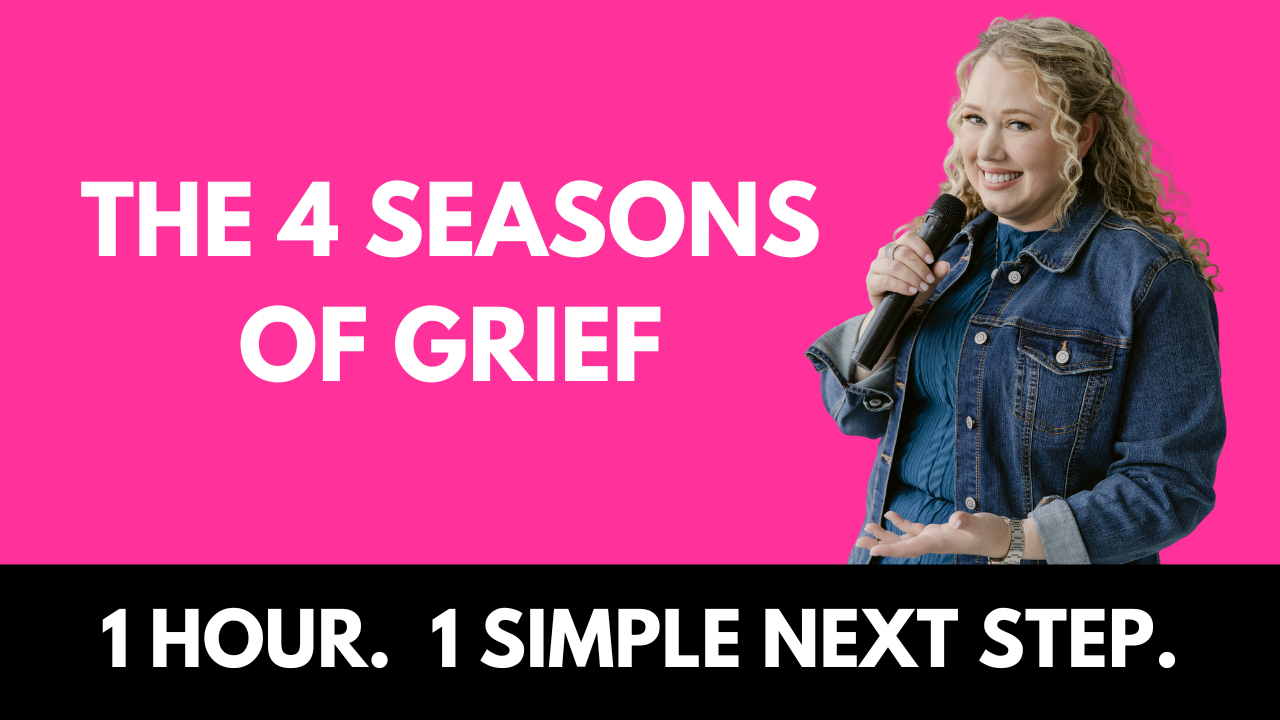
Speaker 4: Hey guys, I hope that you enjoyed that episode and my conversation with Christa, and I wanna make sure that, you know, we have another free live training that's happening on March 24th at 2:00 PM Central time called The Four Seasons of Grief. And in this free training, I'm gonna teach you in one hour what it has taken me years to learn, observe, and document about the journey through grief.
What each person can focus on no matter where they are in their journey, and the importance of not just giving it time, not [00:27:00] just waiting for life to feel better, and us to heal in grief, but intentionally rebuilding a life that we can love to live. Again, if you wanna join me, just go to brave widow.com/live, LIVE, and I'll see you there.
Speaker: before we wrap up. If you're listening and wondering. Am I doing grief right? Am I stuck or am I actually moving forward? I made something just for you. I created a free quiz called The Four Seasons of Grief.
In just a few minutes, you'll find out which season of grief you're in right now, and the one next step you can take today to move forward in a healthy faith-filled way without pretending you're fine when you're not. Just go to brave widow.com/quiz. You'll answer a few simple questions. Get your season and I'll send you a short, practical breakdown of what to focus on in this season so you're not guessing or googling at 2:00 AM.
Again, that's brave widow.com/quiz. [00:28:00] Go take the quiz, find your season, and take your next step today.